Americans are dealing with rising grocery bills, expensive housing costs, and growing financial pressure.
A recent survey from the Federal Reserve Bank of New York revealed that food insecurity across the United States has climbed above levels seen during the peak of the COVID-19 pandemic, even when unemployment rates were far higher. At the same time, consumer confidence continues to weaken.
The University of Michigan Consumer Sentiment Index dropped sharply in May and reached its lowest reading on record. The decline pushed sentiment below levels seen during the Great Recession, the 2022 bear market, and the pandemic slowdown.
Under normal conditions, this kind of economic anxiety usually drags the stock market lower. Instead, the S&P 500 continues to post record highs.
Why Stocks Keep Climbing

Freepik | The tech sector driven by AI, chips, and cloud computing is the primary force fueling the market rally.
The biggest force behind the market rally is the technology sector. Artificial intelligence, semiconductor development, and cloud computing companies continue to attract investor attention at a rapid pace. Chipmakers Nvidia and Micron Technology have delivered striking gains over the last three years, with total returns of roughly 465% and 1,420%.
A small group of tech giants now carries massive influence over the broader market. The “Magnificent Seven” — Nvidia, Apple, Microsoft, Amazon, Alphabet, Meta Platforms, and Tesla — currently make up around 35% of the S&P 500’s total value as of May 2026.
That level of concentration explains why the index continues moving upward even while many households feel economic stress.
Investor enthusiasm may also increase later this year as major private technology companies prepare to enter public markets. SpaceX, OpenAI, and Anthropic are all expected to pursue initial public offerings, adding even more attention to the AI and tech sector.
Is the Market Entering Another Bubble?
Concerns about an AI-driven bubble continue to grow. Many analysts compare the current momentum to the dot-com era of the late 1990s, when internet stocks surged before collapsing in the early 2000s. Still, today’s market structure looks very different.
Many of the companies leading today’s rally generate billions in revenue and maintain profitable business operations. That separates them from many speculative internet firms during the dot-com period. Even so, stock prices can still swing sharply when excitement grows faster than earnings.
Short-term predictions remain difficult. Markets often move ahead of economic reality, and rapid rallies can create periods of instability. Yet history continues to favor patient investors.
What History Says About Staying Invested
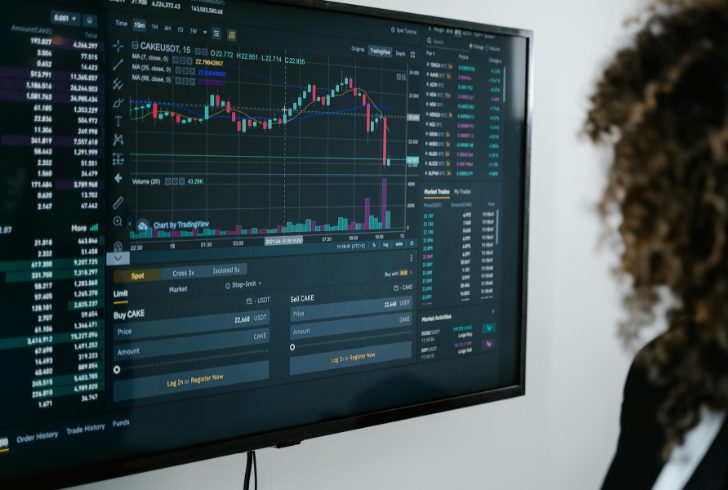
Pexels | History proves that market resilience ultimately rewards patient long-term investors.
The early 2000s offer an important example. Investors who purchased an S&P 500 index fund in January 2000 faced two major market downturns within a decade. The dot-com crash erased years of gains, and the Great Recession followed soon after the recovery began.
Despite those setbacks, the S&P 500 still gained more than 224% over the following 20 years. Total returns now exceed 740% from that period.
A $10,000 investment made at the beginning of 2000 would now be worth approximately $84,000, even without additional contributions. The example highlights how long-term investing can outperform short-term fear, even during difficult economic cycles.
The current disconnect between weak consumer sentiment and a booming stock market may feel unusual, but market history shows that temporary uncertainty does not always stop long-term growth. Economic slowdowns, market corrections, and investor fear have appeared repeatedly over the decades. Strong businesses and broad-market index funds have still rewarded patient investors over time.
While no one can predict the next downturn, consistent investing and a long-term approach continue to remain among the strongest tools for building wealth through market volatility.