

Financial planning often revolves around managing three core elements: income, liquidity, and risk. Laddering is one strategy investors frequently use to balance these factors. The technique is especially common with fixed-income investments such as bonds and certificates of deposit, where it helps generate regular income while reducing sensitivity to interest-rate changes.
However, the same term also appears in a very different setting: initial public offerings (IPOs). In that environment, laddering describes an illegal market practice designed to manipulate demand for newly issued stocks.
Understanding both definitions is important for investors. Depending on the context, laddering may refer either to a disciplined financial strategy or a prohibited trading tactic.
What Laddering Means in Finance
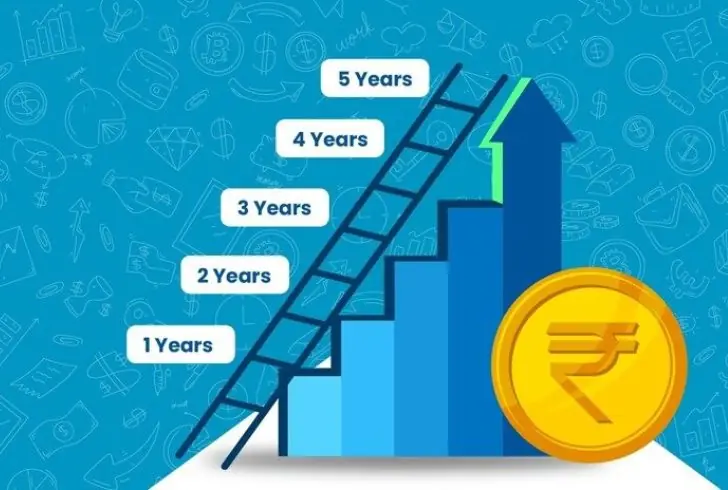
equentis.com | Laddering is the practice of staggering investment end-dates to maintain cash flow.
In investment planning, laddering refers to purchasing several investments that mature at different times. Instead of placing funds into one long-term security, the investor spreads capital across multiple assets with staggered maturity dates.
This structure allows investors to:
- Receive funds at regular intervals as investments mature
- Limit exposure to sudden interest-rate changes
- Reinvest money at updated market yields
The method is widely used in retirement portfolios because it provides regular income while helping safeguard principal when investments are held until maturity.
Typical laddering instruments include bonds, certificates of deposit (CDs), and annuities. Each investment serves as a “rung” on the ladder, scheduled to mature at different intervals.
How Laddering Appears in Securities Markets
During IPO underwriting, laddering refers to a controversial practice. Underwriters allocate shares to select investors at the IPO price before trading begins. In exchange, those investors agree to buy more shares once the stock starts trading publicly—often at higher prices.
This arrangement can inflate demand for the stock and push its price upward during early trading.
Such activity creates a misleading appearance of strong market interest, potentially drawing in additional investors. Because it distorts the fairness of the market, IPO laddering is illegal.
Fixed-Income Laddering in Retirement Planning
Bond laddering is one of the most common applications of the strategy in retirement portfolios. Instead of purchasing bonds that all mature at the same time, investors buy bonds with different maturity dates.
A typical ladder might include bonds maturing in:
1 year
2 years
3 years
4 years
5 years
When the first bond matures, its proceeds are often reinvested into a new long-term bond—usually another five-year security.
Over time, this rolling process keeps the ladder structure intact.
The strategy addresses two key risks:
- Interest rate risk – changes in bond values as rates fluctuate.
- Reinvestment risk – the chance of reinvesting matured funds at lower rates.
Staggering maturities helps reduce the impact of both.
Why Investors Build Bond Ladders
Interest Rate Protection
Interest rates constantly rise and fall. In a laddered portfolio, only part of the portfolio must be reinvested at any given time, reducing exposure to unfavorable rate changes.
Consistent Cash Flow
Because bonds mature at regular intervals, laddering provides a steady stream of payments that can help cover retirement costs or supplement income.
Liquidity and Flexibility
Investing entirely in a single long-term bond limits access to capital. Laddering allows portions of the portfolio to mature regularly, giving investors the option to withdraw funds or reinvest them.
Longer-term bonds often offer higher interest rates. A ladder allows participation in those higher yields while maintaining periodic access to funds.
Building a Fixed-Income Ladder

A ladder strategy requires planning around investment horizon, maturity dates, and bond selection.
1. Choose a Time Frame
Most bond ladders are built to cover a period of five to ten years. In a five-year ladder, one bond matures every year.
Shorter ladders tend to offer:
- Easier access to funds
- Lower exposure to price swings
Longer ladders may provide:
- Higher interest income
- Greater sensitivity to changes in rates
2. Select the Right Securities
A range of fixed-income investments can be used to build a ladder:
- Corporate bonds
- Municipal bonds
- U.S. Treasury securities
- Certificates of deposit (CDs)
Some investors stick with one type of bond to maintain consistency. Others combine several categories to diversify and reduce credit exposure.
3. Allocate Funds Across Each Rung
A typical ladder divides the investment evenly across the different maturity dates.
Example:
If $100,000 is placed in a five-year ladder, the allocation might be:
$20,000 maturing in 1 year
$20,000 maturing in 2 years
$20,000 maturing in 3 years
$20,000 maturing in 4 years
$20,000 maturing in 5 years
When a bond matures, the funds are usually reinvested into a new long-term bond so the ladder continues.
4. Monitor the Portfolio
Even though laddering is relatively straightforward, it still benefits from periodic review. Investors generally keep an eye on:
- Credit quality of issuers
- Interest-rate developments
- Future cash-flow needs
Some rely on investment software, while others consult financial professionals.
Risks Associated With Laddering
Laddering helps manage several risks, but it does not eliminate them entirely.
Interest Rate Risk
If rates rise sharply, longer-dated bonds in the ladder may lose market value. However, maturing bonds can be reinvested at the newer, higher rates.
Reinvestment Risk
When rates decline, the proceeds from matured bonds may be reinvested at lower yields.
Credit Risk
Corporate and municipal bonds carry the possibility that issuers may default on their obligations. Spreading investments across different issuers can reduce this risk.
Inflation Risk
If inflation rises faster than bond yields, the purchasing power of the income generated by those bonds can decrease.
Opportunity Cost
Stocks have historically produced stronger long-term growth than fixed-income assets. Investors using laddered bonds typically sacrifice some growth potential in exchange for predictable income.
Understanding Interest Rate Risk
Interest rate risk—often called market price risk—explains how bond prices react to shifts in interest rates.
When rates rise, bond prices tend to decline.
When rates fall, bond prices usually increase.
Investors who keep bonds until maturity typically receive their original principal regardless of price changes along the way. However, selling bonds early during rising-rate periods may lead to losses.
Because of this dynamic, laddering tends to work best for investors who plan to hold bonds until maturity.
Example of Laddering in Practice
Consider Michaela, a 55-year-old investor approaching retirement. Her retirement portfolio totals about $800,000. In order to reduce volatility, she decides to shift part of her assets into fixed-income investments.
She allocates $500,000 to a bond ladder arranged as follows:
$100,000 in a bond maturing in 1 year
$100,000 in a bond maturing in 2 years
$100,000 in a bond maturing in 3 years
$100,000 in a bond maturing in 4 years
Each year, the maturing bond provides cash that is reinvested into a new five-year bond. This process maintains the ladder while allowing Michaela to adjust to current interest rates.
If the entire $500,000 had been placed into a single five-year bond, rising interest rates during those five years could have created a missed opportunity for higher yields. The ladder reduces that risk.
Short-Term vs. Long-Term Bond Ladders

Investors often compare shorter and longer ladder structures before building a portfolio.
Short-Term Ladders
Short-term ladders offer:
– Lower interest-rate volatility
– Faster access to funds
– Potentially lower yields
They may also provide some protection against inflation because reinvestment occurs more frequently.
Long-Term Ladders
Longer ladders usually deliver:
– Higher yields from longer-duration bonds
– Less frequent reinvestment
However, they can be more sensitive to interest-rate shifts and inflation.
Choosing between the two depends on income needs, risk tolerance, and investment goals.
How IPO Laddering Manipulates Markets
The mechanics of laddering in IPO markets often unfold through a three-step process.
Stage One – Pre-IPO Allocation
Underwriters identify institutional clients or wealthy investors and offer them IPO shares at a discounted price before the public offering.
Stage Two – Agreement
Those investors agree to purchase additional shares upon the commencement of public trading. The purchases occur at predetermined price levels above the IPO price.
These agreements often remain informal to avoid regulatory scrutiny.
Stage Three – Post-IPO Buying
Once trading opens, the selected investors buy more shares as promised. Their coordinated purchases push the stock price higher, creating the appearance of strong demand.
This artificial momentum can attract additional investors who fear missing out on a rising stock. Regulators treat this activity as market manipulation, which is why IPO laddering is prohibited.
Laddering carries two distinct meanings in finance. As an investment strategy, it involves staggering bond maturities to manage risk, maintain steady income, and allow reinvestment over time. This method is commonly used in retirement planning to balance stability and liquidity.
In IPO markets, laddering refers to an illegal tactic that inflates stock prices by creating artificial demand. Understanding the difference helps investors interpret financial discussions and apply the strategy appropriately in fixed-income portfolios.